Sign In
Upcoming Event
 Free Newsletter

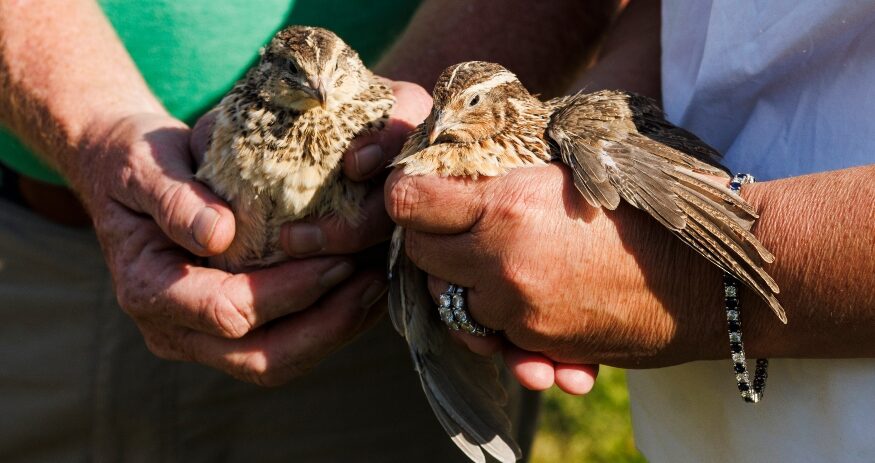
Brittney and Matt Miller hold a pair of quail raised at Manchester Farms in Columbia, a family-owned operation and the largest quail producer in the United States. (Photo/Forrest Clonts)
Brittney and Matt Miller hold a pair of quail raised at Manchester Farms in Columbia, a family-owned operation and the largest quail producer in the United States. (Photo/Forrest Clonts)
Manchester Farms grows into largest US quail producer
Brooke Strickland // March 17, 2026//



- Manchester Farms in Columbia is the oldest and largest quail producer in the United States
- The farm produces about 50,000 quail weekly and sold nearly 50 million eggs in 2025
- CEO Brittney Miller continues the legacy started by her father, founder Bill Odom
- The company has expanded into quail eggs, value-added products and nationwide e-commerce
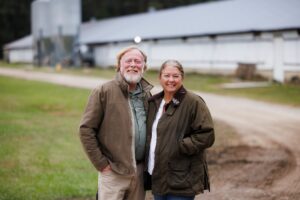
Founded in 1974 by Bill Odom, Manchester Farms began with passion and modest roots. Odom, who had a background in poultry science, was raising quail in his backyard to train his hunting dogs, but his flock grew beyond what he expected.
Soon, neighbors began asking to buy birds to eat, so the Odom family started dressing quail on a backyard picnic table and distributed them locally — to individuals, restaurants and chefs.
Meeting an industry need
Today, Manchester Farms is the oldest and largest quail producer in the United States. Under the leadership of Brittney Miller, Odom’s daughter, the 150-acre farm in Columbia produces 50,000 Pharaoh quail weekly and in 2025, nearly 50 million eggs were sold. The farm employs approximately 100 people and the quail appear on menus and on grocery shelves around the country.
“What started as a hobby revealed a very real gap in the American food market,” Miller explained.
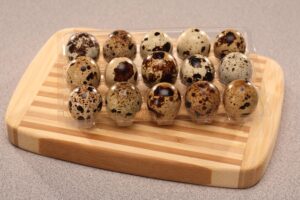
Now, quail is a rising star of the food scene, with continued consumer interest in it as an alternative protein to chicken and turkey. Quail eggs especially are recognized as a nutrient-dense superfood with up to five times the iron and potassium of chicken eggs, making them popular for health-conscious individuals or those on specialty keto or paleo diets.
Building on a legacy
At the very heart of Manchester Farms’ success is its more than 50-year legacy of keeping quality front and center. Additionally, Miller credits her team as a big part of the company’s ongoing growth.
Miller shared, “We will never be the Tysons of the world, and we don’t want to be. We also maintain our own security and sensory inspection team to triple-check every bird for perfection … and we are nearly antibiotic-free. We believe that if you give birds a healthy, stress-free life, you shouldn’t need pharmaceuticals. We also have staff members who have been deboning quail by hand for 40 years, and now their daughters and granddaughters work right here alongside them. I call our extended community ‘the flock’ because that’s exactly what they are to us.”
Top employees, Miller stated, can debone 100 quail in an hour without ripping the skin or tearing the meat. They even have scissors customized to their personal preference of handle and blade, just like a chef’s knife.
“It is truly an art form, and I am in awe of them every single day,” Miller said.
At Manchester Farms, nothing goes to waste, either. Bones go to chefs for stock, innards go to gourmet dog food companies, and manure from grow-houses is composted by a local turf company into fertilizer.
“We close the circle of life and celebrate these birds as fully as we can,” Miller explained.
Diversification and overcoming challenges
Miller shared that expanding into providing quail eggs was crucial to the company’s transformational sales increase, but so was diversifying the product line. Consumers can now also purchase bacon-wrapped quail breasts and corporate gifting options are additionally available. Further, Manchester Farms has a private label co-manufacturing service for other brands and Miller invested heavily in a direct-to-consumer e-commerce channel that introduced nationwide shipping so people could try quail products.
This growth hasn’t come without challenges, though. For example, Hurricane Hugo destroyed all but one of the facilities at Manchester Farms in the late 1980s, which has since been rebuilt. Weather continues to interrupt operations at times, with the area experiencing other hurricanes, ice storms, and periods of extreme summer heat and humidity. All these things impact hatch rates and bird health, and the team has learned to stay nimble and adjust as needed season by season.
Biosecurity is also important to Miller, and she and her team are always on high alert to the ongoing threat of highly pathogenic avian influenza (HPAI).
“It’s not to say that we won’t ever get hit one day, but we are crazy about trying to make sure everything’s safe,” she said. “As soon as you let your guard down, it can happen. We work incredibly hard to make sure that weak links never exist. Everyone who enters our facilities must spray in and out, change clothing, and spray down their vehicles. Our pest control team works exclusively for us and doesn’t service other poultry operations.”
Looking ahead
With more people recognizing the benefits of quail meat and eggs, the sky’s the limit for Manchester Farms. The team plans on exhibiting at the Natural Products Expo West this year, will be involved in high-profile charitable and culinary events across the region, and they also plan to partner with chefs for farm-to-table dinners at local venues.
“South Carolina made us, and we try to give back to it every chance we get,” Miller said. “The best chapters of this story are still ahead.”
P